
Connect with people sharing your path


Safar Send is a platform that brings people together by connecting travelers heading in a certain direction with individuals who need to send a package to the same destination. By making use of existing travel routes, it offers a more efficient, flexible, and community-driven way to deliver items, while helping travelers make better use of their journey and allowing senders to move packages in a faster and more personal way.
The real chat feature of Safar Send enables seamless communication between travelers and senders, making coordination simple and reliable. Through the platform's built-in messaging system, users can discuss important details such as pickup and drop-off locations, delivery timing, package size, and any special handling instructions. This feature fosters trust and transparency, allowing both parties to ask questions, clarify expectations, and confirm arrangements before finalizing a delivery.
Safar Send's multilingual support makes the platform accessible and inclusive for users from diverse linguistic backgrounds. With full functionality in English, French, German, Arabic, Farsi/Persian, Spanish, and Turkish, travelers and senders can navigate the app and communicate comfortably in the language they know best. This broad language coverage not only enhances user experience by removing language barriers but also strengthens community connections across regions and cultures.
Airlines carry an enormous volume of passengers and goods. In 2023 nearly 97,000 scheduled flights departed daily worldwide, carrying about 12.1 million passengers per day. Annually that was roughly 4.4 billion airline passengers. For example, U.S. carriers alone operate ~27,000 flights daily with 2.7 million passengers. Asia-Pacific is the largest air-travel market (1.4 billion passengers in 2023, ~34.7% of global), followed by Europe (988 million, ~26%) and North America (773 million, ~23%). In total, about 29,000 commercial jet airliners were in service globally in 2023. These aircraft have typical average seating loads around 82–83%, so on a 120-seat plane roughly 100 seats are filled on average.
Each passenger brings luggage. Survey data indicate a mean adult passenger + carry-on ≈84 kg, plus an average checked bag of ~16 kg. In practice, not every traveler uses the full allowance (e.g. 20–30 kg allowed), so some payload capacity goes unused. In terms of volume, belly holds of passenger jets typically accommodate a few to several tonnes of cargo. For example, narrow-body airliners carry on the order of 2–4 tonnes of freight in the belly, whereas modern wide-bodies (A350, B777, etc.) carry roughly 10–15 tonnes (for context, dedicated cargo freighters range up to ~100 t.). As one analysis notes, airlines “generate revenue from unused space” by carrying cargo in passenger jets. Indeed, passenger airplanes account for about half of air cargo capacity worldwide: in 2018 roughly 48% of airline freight (by tonne-kilometer) was belly cargo, and even after the pandemic it’s still on that order (~50%).
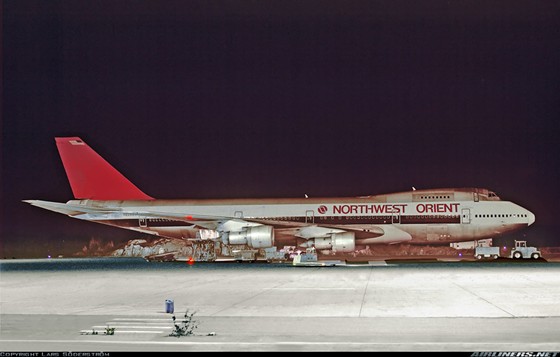
Airlines move vast quantities of freight and mail. In 2023 carriers transported about 61.4 million tonnes of air cargo. Including mail and parcels raises that total to roughly 65.6 million tonnes per year. For perspective, U.S. airlines alone fly on the order of 61,000 tonnes of cargo every single day. These volumes reflect high-value, time-sensitive goods: air freight represents about 35% of world trade by value but under 1% by weight.
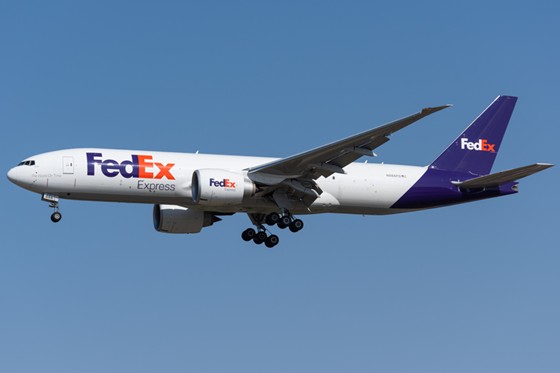
In short, billions of passenger flights and millions of tonnes of cargo move every year. Tens of thousands of these flights could, in principle, carry extra mail/parcels in their unused belly or baggage capacity, instead of scheduling separate trucking or freighter trips. For example, if each of 100,000 daily passenger flights took on just 1–2 extra tonnes, that would add 100–200,000 tonnes/day of freight capacity – comparable to or exceeding current dedicated cargo operations. All of this flying occurs on existing schedules, so using the space avoids many additional emissions.
Freight transport by air is very carbon-intensive per tonne. For illustration, moving a small 2 kg package 1000 km emits about 4.42 kg CO₂ if flown by air, compared to only 0.21 kg by truck or 0.03 kg by container ship. In general, aviation (passenger and cargo combined) accounts for about 11.6% of all transportation CO₂, whereas road transport (mostly cars and buses) is ~75%. Rail and shipping are far cleaner: rail freight is ~1% of transport emissions.
By loading packages onto already-scheduled passenger flights, carriers can avoid separate cargo trips (which would burn even more fuel). Airlines note that belly freight “reduces overhead costs associated with dedicated freighters” – in climate terms, this means fewer flights overall. For example, a fully loaded Boeing 777F consumes only a fraction more fuel per tonne than the same airplane empty, so adding extra cargo to full passenger flights has low marginal emissions.
Nevertheless, air freight remains carbon-intensive. Shifting goods transport to lower-carbon modes (rail, ship) is preferable. For perspective, road freight emits ~20× less CO₂ per tonne-km than air. Because of this, logistics planners reserve air cargo for high-value or urgent shipments. The key mitigation point here is avoiding extra flights: by using spare belly capacity on flights that are going anyway, postal companies could prevent dedicated flights or long truck hauls.
Passenger planes account for on the order of 100,000 flights per day worldwide. Each carries passengers plus luggage and has bellies that can hold several tonnes of cargo. In 2023 airlines carried ~61 million tonnes of freight (65.6 Mt including mail). Millions of tons of mail already ride in those holds, but substantial spare capacity exists. If postal companies could systematically book that spare space (instead of scheduling new freight trucks or flights), many extra trips could be avoided – saving fuel and CO₂. However, even with optimization, air shipments remain more carbon-intensive per kilo than ground or sea. Thus the greatest climate benefit comes from shifting as much freight as feasible to lower-carbon modes, and using passenger flights only to absorb shipments that would otherwise require separate flights.
Safar Send officially launched on Google Play and App Store. Core features include filtering search, live chat, basic free trip promotion, and supporting seven languagse.